BRIDGE STREET ARCHITECTURE
Mixed-use development
2025
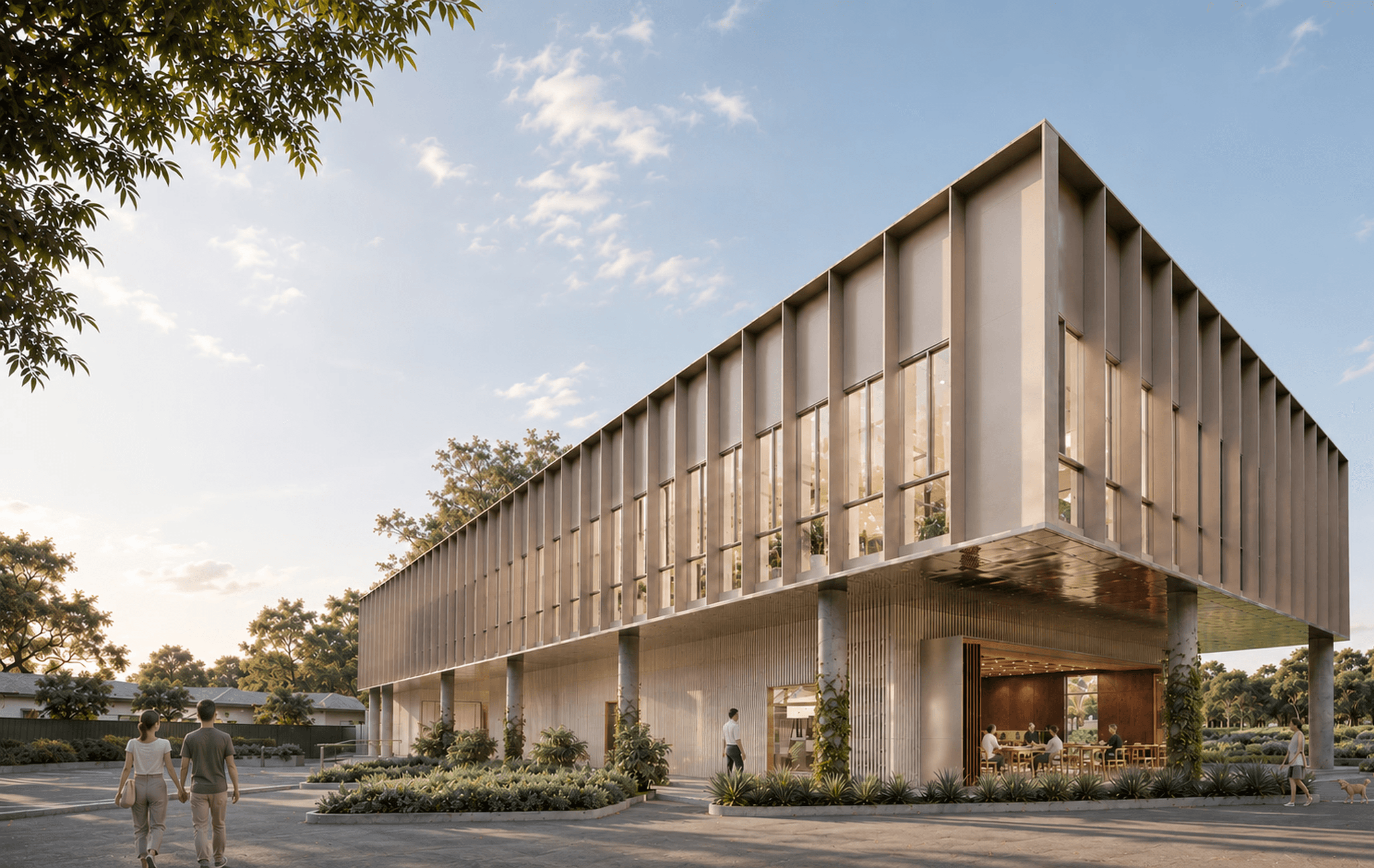
Bridge Street is conceived as a single, elevated form resting lightly above a transparent ground plane. Defined yet open, it holds a calm civic presence — a building that connects with its surroundings through light, rhythm, and movement.
From the street, the approach feels open and welcoming. Glazed frontages reveal activity within — the café spilling softly into the footpath, the veterinary clinic framed by greenery. Movement through the site is intuitive; thresholds are blurred, and spaces unfold naturally from public to private, interior to landscape.
The upper façade carries a steady rhythm of vertical fins, casting gentle shadows across the glazing. Beneath, a reflective soffit draws daylight into the heart of the ground plane, amplifying the sense of openness and shared energy.
Materiality is calm and enduring. Concrete anchors the building to the ground; timber battens bring warmth to touch; anodised metal reflects the lightness of the elevated volume. Together, they create a tactile and timeless palette that invites use and familiarity.
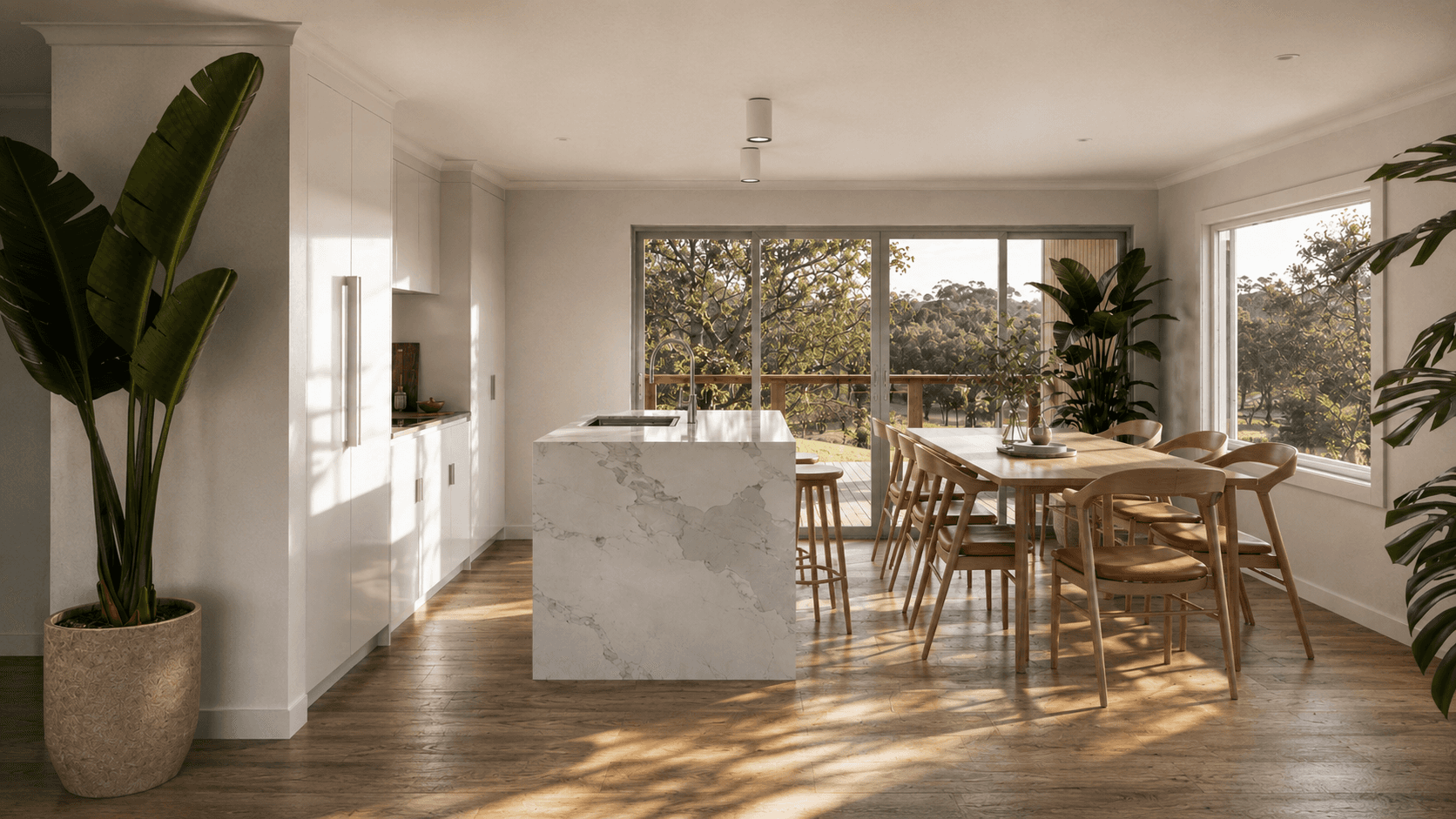
Inside, circulation encourages interaction and pause — places to meet, linger, and look out. Natural light guides movement, and views to the landscape provide quiet moments of orientation.
Performance is achieved through simplicity — shading, ventilation, and water-sensitive planting work together to create comfort and reduce impact.
More than a collection of spaces, Bridge Street is designed for people — a place of daily rhythm and exchange, where architecture supports connection and community life.
Bridge Street is conceived as a single, elevated form resting lightly above a transparent ground plane. Defined yet open, it holds a calm civic presence — a building that connects with its surroundings through light, rhythm, and movement.
From the street, the approach feels open and welcoming. Glazed frontages reveal activity within — the café spilling softly into the footpath, the veterinary clinic framed by greenery. Movement through the site is intuitive; thresholds are blurred, and spaces unfold naturally from public to private, interior to landscape.
The upper façade carries a steady rhythm of vertical fins, casting gentle shadows across the glazing. Beneath, a reflective soffit draws daylight into the heart of the ground plane, amplifying the sense of openness and shared energy.
Materiality is calm and enduring. Concrete anchors the building to the ground; timber battens bring warmth to touch; anodised metal reflects the lightness of the elevated volume. Together, they create a tactile and timeless palette that invites use and familiarity.
Inside, circulation encourages interaction and pause — places to meet, linger, and look out. Natural light guides movement, and views to the landscape provide quiet moments of orientation.
Performance is achieved through simplicity — shading, ventilation, and water-sensitive planting work together to create comfort and reduce impact.
More than a collection of spaces, Bridge Street is designed for people — a place of daily rhythm and exchange, where architecture supports connection and community life.